Pope Leo recently released his papal encyclical about Artificial Intelligence — “Magnifica Humanitas” or “Human Dignity.” The encyclical has many propositions worthy of careful consideration, even by those of us who are not Roman Catholic, nor specialists in theology or in computer technologies.
One phrase that captures my attention is his references to evangelical language. Language is a basic component of communication and of creating cultures. Artificial Intelligence influences and duplicates many aspects of communication. Hence, it is appropriate that the concept of evangelical language appears several times in the long encyclical.
Evangelical comes from the Greek “eu” meaning good and “angelia” meaning message that in English becomes evangelical. Hence, the word refers to a good message or good news. It is a secular term that is often adopted for Christian witness, and the encyclical occasionally has that specific reference. It also refers more generally to the type of communication that should characterize human relationships.
I ponder what evangelical communication would be; that is, a good message that transmits good news. Several characteristics might facilitate that type of communication.
A good message is not antagonistic. Harsh words generate responses of anger, harsher words, and sometimes violence. Gentle is the opposite of antagonistic. Gentle words produce peacefulness and can generate positive responses, including good dialogue and even some agreement.
Good news is never imposed by an external force against a person’s will. Persuasion, not enforced capitulation, is the goal.
Freedom and not servitude is the result of a good message. Freedom is one of the inalienable constitutional rights of all American citizens. Good communication within and among components of American society is essential to preserving that freedom.
A good message has clarity. A biblical verse indicates that if a trumpet gives an uncertain sound, those who hear will be confused and uncertain about how they should respond (I Corinthians 14:8). Transmission of good news must be presented with as much clarity of speech as is possible.
Truth is the goal of any evangelistic communication. Truth is something sought and valued. No human thought or speech is perfect, and none of us owns the truth. Too much deceitful speech and communication is circulated among us. Worse than being wrong about truth is the temptation to live as if there is no truth. As a wise man said, “None of us possess the truth, but each of us has the right to all truth.” Good news always involves a search for truth.
A good conversation is inclusive in that it is open to diverse points of view and life experiences. One listens carefully to different voices, especially to those who have most often been silenced. Interfaith dialogue among Christians and interreligious conversations among different faiths and listening to several ideologies are necessary in our increasingly complex society. Each must give an accurate, truthful statement and be heard by others if any consensus about our future becomes possible.
A good conversation always opens up new possibilities for participants. Professor Willis Johnson, a stalwart teacher of biology and the sciences at Wabash College, argued that it is immoral for a teacher to address a subject as terminal so that it does not open up new avenues of thought and exploration. An evangelical conversation carries the participants along on a wave of energy, and one hopes enthusiasm, toward new vistas and opportunities.
Another phrase from the papal encyclical that catches my imagination is a description of our need for leaders in local communities, governments, religious organizations, industry, and organizations —indeed, all of us — to become “weavers of hope in the world.”
As I said, many of the phrases and propositions of the encyclical are worth pondering and implementing, especially if we wish to become weavers of hope.
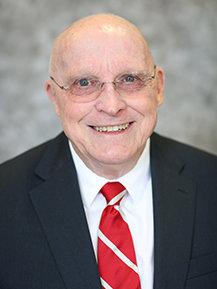
Raymond Brady Williams, Crawfordsville, LaFollette Distinguished Professor in the Humanities emeritus, contributed this guest column.