
The lived experience of the elderly is increasingly significant in contemporary society and for our organizations. The elderly cohort is living longer so that more people are living and active after retirement. Birthrates are declining, and the number of school age students is decreasing. Colleges and universities are poised at what is called “the cliff” because the number of college-age youth will decline precipitously over a couple of decades. Hence, the elderly make up a larger percentage of the population. These changes create tensions and challenges for organizations and churches,
Perhaps my experience of growing old in church will be instructive for current participants in clubs, social groups, and churches. Perhaps even for those we are not yet elderly and for those who choose not to participate in formal groups.
I have been associated with Christian churches for 90 years, beginning in the church nursery, and I have been a member of First Christian, Crawfordsville for more than 60 years. I am still growing older in the church and give thanks for every new day. Growing older involves several impairments that I term the “five Ss”: diminishing Strength, Speed, Stamina, Stability, and Smarts. Individual experience impairments differently, but they affect our level of participation in organizations.
Many leaders and some pastors do not know how to deal with me and my peers — as problem or resource, deadweight or leader, ignored or cultivated, follower or dominant, loved or tolerated. The experience of many elderly is probably a mixture of these. The blend describes growing older in church and in other organizations.
Service clubs, non-profit organizations, and churches report declining numbers of participants and volunteers. Those organizations contribute significantly to personal and group identity and they help sustain our social and communal life. We are bombarded with statistics indicating that churches, especially mainline churches, are aging rapidly and shrinking. Sociologists deal with largescale populations and often stereotype and pigeonhole church groups. The experience of individuals and local churches are small scale and intensely personal.
Social networks are often age-dominant silos that shrink as they age. Colleagues and friends move away to be close to children, or to enter assisted living facilities, or become unable mentally or physically to interact with us, or die. Funerals become a common social gathering. Fellowship dinners are the most elaborate we experience and are intergenerational providing opportunities to interact with small children.
A few years ago, sociologists reported an increase in the number of “the Nones” who claimed no association with any religious organization. It reflected the contemporary individualism: “I do not identify with any organization, but I am spiritual.” Now sociologists report a decline in the number of those claiming to be Nones. Many have become serious seekers.
Fortunately, during the past 10 years our local congregation has benefitted from a significant number of additions despite effects of Covid. Several young families, including many young children, now participate. The sweetest sounds in our sanctuary are made by infants and small children who sit with their parents. Seeing the children is a highlight of the services for those who don’t often interact with children. Parents are assuming positions of leadership and engaging in work that people my age are no longer able to do.
These are suggestions of what the elderly can do:
• Assist others to flourish as mush and as long as possible.
• Provide increased financial support. Some of us have more expendable funds than we ever expected to have and that we might not need. Young families are more stressed with demands on their time and finances.
• Encourage those who are undertaking leadership and avoid trying to dictate how they must lead the church. I suggest a revision of the old injunction, “Let go and let God,” to say, “Let go and let others.”
• Maintain unity for good works. Do not let generational differences become a point of tension and conflict. Unity is hard to build and preserve in our current social and political context. It is essential if our community is to flourish.
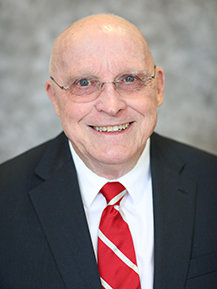
Raymond Brady Williams, Crawfordsville, LaFollette Distinguished Professor in the Humanities emeritus, contributed this guest column.


