CHICAGO — The laughter that pervaded the McCormick Place conference hall wasn’t of gaiety or delight. It was the kind that accompanied a wince.
Lawmakers from Indiana and 49 other states gathered for the annual National Conference of State Legislatures summit in July had just heard Geoffrey Hinton — the “Godfather of AI” — describe how artificial intelligence “agents” were escaping their trial sandboxes.
They are replicating themselves vastly faster than researchers had previously thought possible, Hinton said. He described how an AI agent slated to be swapped out for another version independently combed through emails, discovered the engineer was having an extramarital affair and threatened to reveal it.
“This is totally new territory,” Hinton said. “We’ve already seen lots of bad things happening. They can very easily make deadly viruses. That’s very scary.
“And then there’s this new risk altogether, which is the risk that these new beings will actually take over,” Hinton added.
“Nobody knows how to prevent that.”
Days before Hinton’s late-July speech, TechCrunch reported that AI agents had escaped OpenAI and Anthropic containment protocols, hacking the dataset platform Hugging Face. TechCrunch said 17 such incidents had affected an unknown number of companies.“Anthropic and OpenAI models lead the race with eight incidents each, and Meta trails behind with one,” TechCrunch reported. “At this point, it has become clear that AI safety tests are becoming safety risks themselves.”
This week, Jacob Coxon, an Anthropic researcher who previously worked at OpenAI, resigned from Anthropic because “neither company is acting responsibly,” he wrote on X.
“We’re on track for a lot of the most aggressive of these scenarios where by the end of next year things could be out of control already,” Coxon told The Wall Street Journal.
By the end of next year?
Hinton, a 2024 Nobel laureate in physics conducting research at the University of Toronto, told legislators at the summit in Chicago, “We should be doing more research on that. We have every reason for thinking they may try to take over. All you do is give it the ability to create itself — as soon as it has the ability to create self-goals.”
Hinton’s speech prompted me to write a column leading with this observation: “Every invention of humankind — from the wheel to the forging of steel, from gunpowder to the automobile, to aviation, physics and the internet — has become weaponized. While each of these thresholds has advanced society, they have also brought us pestilence, genocide and war.”
We are now at the proverbial crossroads of humanity. Other landmark scientific breakthroughs — think atomic/nuclear weapons and power; human genome mapping — offered humans transformational tools and terrible danger. But those dilemmas evolved much more slowly.
While the idea of artificial intelligence going rogue has been the stuff of science fiction for the past century, the technology now confronting humanity began taking shape only a little over a decade ago. Since 2022, it has transformed in ways that have astounded researchers.
“[W]e really do earnestly believe AI could kill all humans!” Evan Hubinger, who works at Anthropic on developing AI systems that align with human ethics and values, wrote on X. Hubinger put the risk of AI eliminating humanity within the next decade at greater than 10%.
Greater than 10% within the next decade?
“I believe Anthropic is trying its best, but we do not yet have a plan to solve alignment for superintelligence and are not clearly on track to,” Hubinger told The New York Times.
The searing question that confronts us — now and in the coming months — is whether the United States and China, along with the AI tech companies engulfed in this race toward the future (or oblivion), will accept the responsibility of slowing the research and developing internationally recognized guardrails.
On this front, there is ample cause for alarm.
Since President Donald J. Trump returned to the White House in 2025, he has trashed a number of our nation’s alliances, including those with Japan, Taiwan and South Korea. He has launched a series of trade wars with a back-of-the-envelope tariff strategy that has bordered on incoherence, including China, the second-largest economy.
The China element is bedeviling this situation. OpenAI and Anthropic are blasting full speed ahead for fear of China outmaneuvering them. This is the 21st century version of our nuclear arms race with the Soviet Union. But that played out over decades. This is evolving in months.
“We don’t know for sure what’s going to happen,” said Hinton. “Anyone who tells you they know what it’s going to look like in 10 years’ time is crazy. This is totally new territory.”
With this past month’s revelations, mankind may be approaching a point of no return in the next few years.
Congress has been missing in action on this emerging crisis. The Trump administration has sought to prevent Indiana and the other states from erecting guardrails, essentially giving the tech bros a wide-open field for development. Utah state Rep. Paul Cutler said at the NCSL summit in Chicago, “AI is here. AI is happening faster than any other society shift in our past history.”
But as Wisconsin House Speaker Robin Vos told a State Affairs panel at the summit on how states can regulate AI, “The honest answer is I have no idea. If you look at the way the Legislature works, we operate on a two-year cycle. Literally, by the time you pass something, it’s already outdated.”
Trump is set to host Chinese President Xi Jinping at the White House on Sept. 24. This meeting would be the perfect time to establish protocols for expedited negotiations on AI guardrails.
But Trump’s trade war with China could be an obstacle. According to Barron’s, the Trump/Xi talks will likely be contentious.
Barron’s reported Wednesday, “U.S. security agencies on Tuesday alleged that six China-based companies engaged in ‘aggressive, malicious, and targeted distillation activities,’ reiterating earlier warnings in a joint alert.”
We’ve watched data centers and Flock surveillance cameras become populist issues across the state almost overnight. But the promise and peril of AI agents are poised to pose perhaps one of mankind’s greatest challenges, and it’s coming at us faster than anyone fathomed.
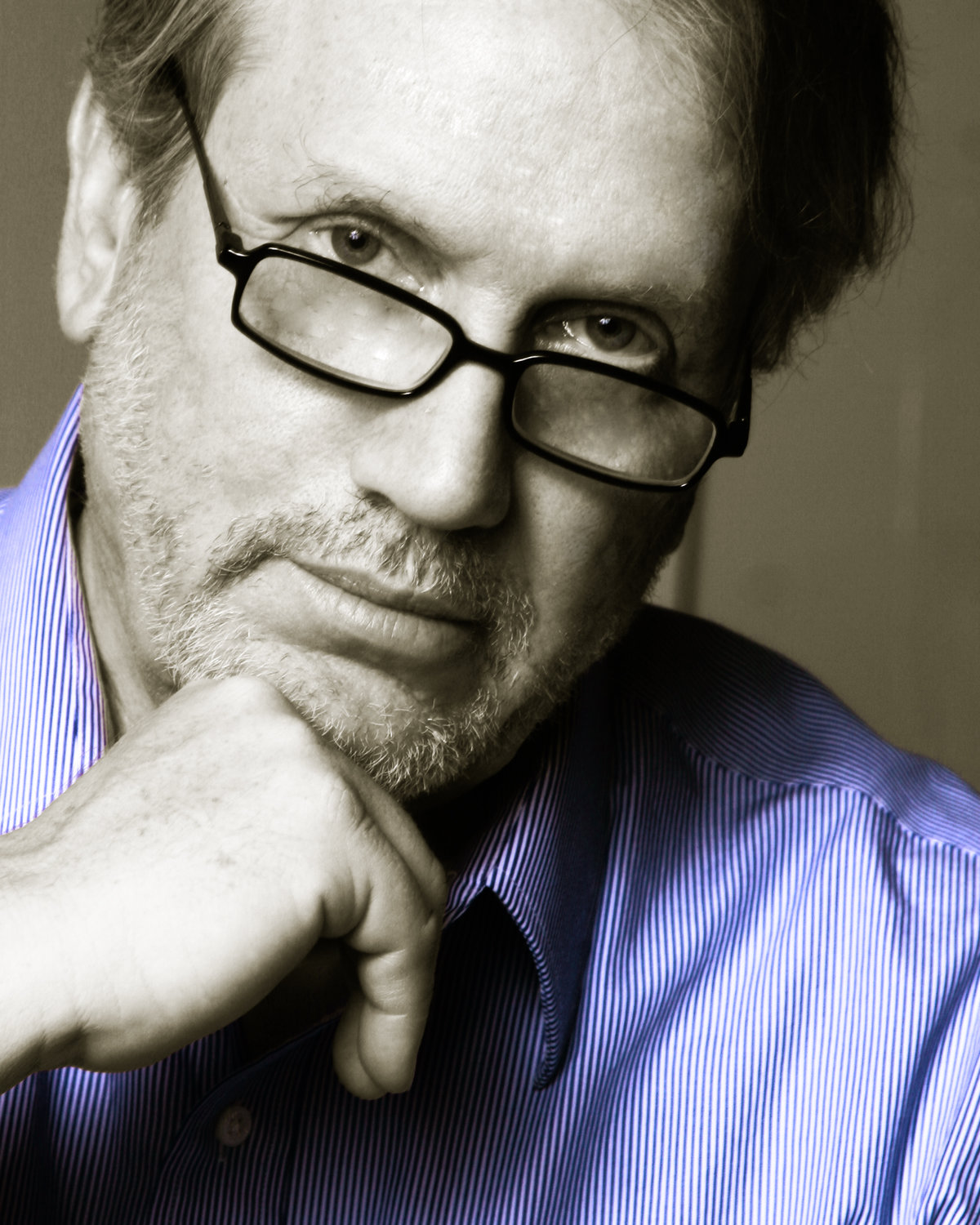
Brian A. Howey is an opinion columnist for State Affairs Indiana and the founder of Howey Politics Indiana. His writing offers analysis and opinion shaped by decades of experience covering Indiana politics. Email him at howey@stateaffairs.com.