NOBLESVILLE — Our caravan of almost two dozen refurbished Indiana ambulances and fire trucks snaked into Guatemala City after sunset in November 1988. Earlier that day, we had met in the border town of Tapachula with a squadron of bomberos, who greeted us by ripping their department patches off their uniform sleeves as a gift. When we arrived in the capital, several dozen Hoosier Lions Club members stared, transfixed, at glowing streams of lava coursing down the sides of a volcano looming in the distance.
It was a fascinating entry into this Central American nation that was attempting to break the grip of authoritarian rule over the previous three years after four decades of civil war that had claimed 250,000 lives. A new constitution followed a series of coups; Marco Vinicio Cerezo Arévalo was the first civilian president in decades, but the civil war and remnants of iron rule still festered.
The next morning, a different reality settled in. At about every other intersection in the capital’s downtown, a jeep sat with two or three soldiers. It was a not-so-subtle show of banana republic force. In my American experience, such a display of military power came after civil unrest, followed by a governor calling up the National Guard.
Later that day, the clerk at our hotel warned me about the sprawling national security facility just around the corner. “If you take a picture of it, somebody will come out and smash your camera,” the clerk said. “Or, perhaps, take you inside.”
I took his advice seriously.
In my four decades as a professional journalist, this was the first of three times I grappled with an authoritarian regime.
The second came in 2007 when I joined a congressional delegation headed by U.S. Sen. Richard Lugar and former colleague Sam Nunn. Destination: Moscow, less than a decade after strongman President Vladimir Putin emerged.
Russia had evolved from a Communist Soviet state with totalitarian rule before it fractured into 15 republics in 1991. After tormented democratic and capitalist impulses were shattered under the rule of Boris Yeltsin, he handpicked Putin, the former KGB agent who eventually displaced liberal rule for an authoritarian state. It is now morphing into a totalitarian retrenchment since his 2022 war with Ukraine commenced.
The Lugar delegation was situated at the Grand Moscow Marriott. For the first several days, a series of Carnegie Moscow Center seminars took place. After returning to my hotel room from one such event, I found it in disarray. My papers had been scattered about the room. My luggage had been searched.
I reported the incident to Andy Fisher, Lugar’s communications director, who was not surprised. Previous Lugar codels had found agents standing for long periods outside hotel rooms. Everyone assumed the phones and rooms were bugged.
As the Lugar-Nunn codel prepared to leave Yekaterinburg, Russia, for Odesa, Ukraine, I was told my passport was missing. I had given it to U.S. Navy Chief Floyd Logan, who managed codel personnel and kept all our passports. The situation set off a flurry of phone calls among American diplomats. About 15 minutes later, my passport turned up.
I hustled to the plane, which took off just minutes later. Once in the air, I turned to Kenneth Myers III, a Pentagon nuclear deterrence official. “What the hell was that about?” I asked.
“They didn’t know who you were,” he said. “They just wanted to take one last look at you.”
I relate these experiences while my country — the United States of America — appears to be sliding into an authoritarian state, with the First Amendment on the line. President Donald J. Trump has branded American journalists with the Stalinist phrase “enemies of the state.”
There have been lawsuits against The New York Times, The Wall Street Journal, ABC News and CBS’s “60 Minutes.” ABC and CBS settled for millions. Defense Secretary Pete Hegseth has booted mainstream news organizations from the Pentagon while he purges 20 generals and admirals and is now directing a war against Iran, with little official information. Unlike other conflicts, there are no reporters embedded with our troops.
Late-night comedians such as Stephen Colbert and Jimmy Kimmel have faced scrutiny from Trump’s Federal Communications Commission over … jokes.
Trump attempted to bar The Associated Press from the White House after it refused to call the Gulf of Mexico the “Gulf of America.” This past Friday, Trump announced on Truth Social that he is banning CNN, MS NOW and POLITICO from the White House.
Trump complained that “something is wrong with a country that can allow people to write purposely negative stories.” Federal Judge Timothy Kelly — a Trump appointee — ordered access restored, which the White House defied until mid-day Thursday. For several hours, Chinese state media had access to the White House; American reporters did not.
On Monday, he debuted Trump TV on YouTube, borrowing a page from Indiana Gov. Mike Pence, who in January 2015 scuttled plans for Just IN, a government-run news service intended to bypass the press after it ignited fierce criticism.
Trump appears to be seeking to reinforce his rule in the court of public opinion rather than the rule of law. And like Putin, Hungary’s former Prime Minister Viktor Orbán and Turkey’s President Recep Tayyip Erdogan, these regimes attempt to co-opt existing media, as mogul David Ellison has done to CBS News and now CNN.
Reporters Without Borders, a free press organization based in Paris, counts 130 journalists jailed in Turkey. Orbán created what the Los Angeles Times described as “an almost Orwellian environment” where the government weaponized its control of a majority of news outlets. Putin has ordered the murder of 43 reporters since 1999.
A Sept. 15 Pew Research Center poll revealed 73% of Americans (including 66% of Republicans and 81% of Democrats) believe press freedom is extremely important to society’s well-being.
In “The Prevention of Literature,” English author George Orwell wrote, “Freedom of the press, if it means anything at all, means the freedom to criticize and oppose.”
That was the crux of what sent colonial aristocrats into a revolutionary mode 250 years ago. But Orwell also warned, “Unpopular ideas can be silenced, and inconvenient facts kept dark, without the need for any official ban.”
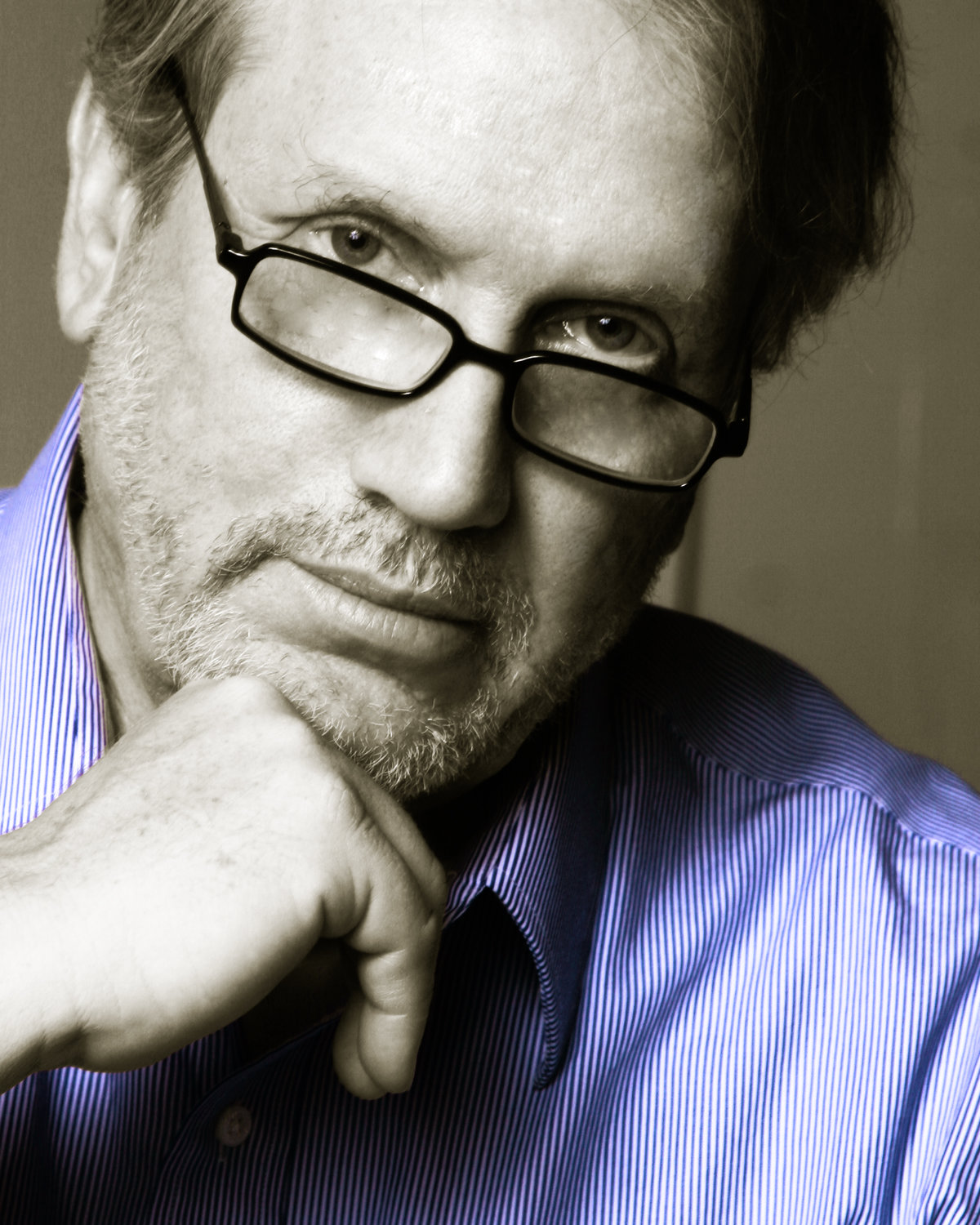
Brian A. Howey is an opinion columnist for State Affairs Indiana and the founder of Howey Politics Indiana. His writing offers analysis and opinion shaped by decades of experience covering Indiana politics. Email him at howey@stateaffairs.com.